
Build Digital Assets: From Tasks to Scaling Online
Build Digital Assets: From Tasks to Scaling Online
Jan 17, 2026
How to Become a Digital Asset Entrepreneur
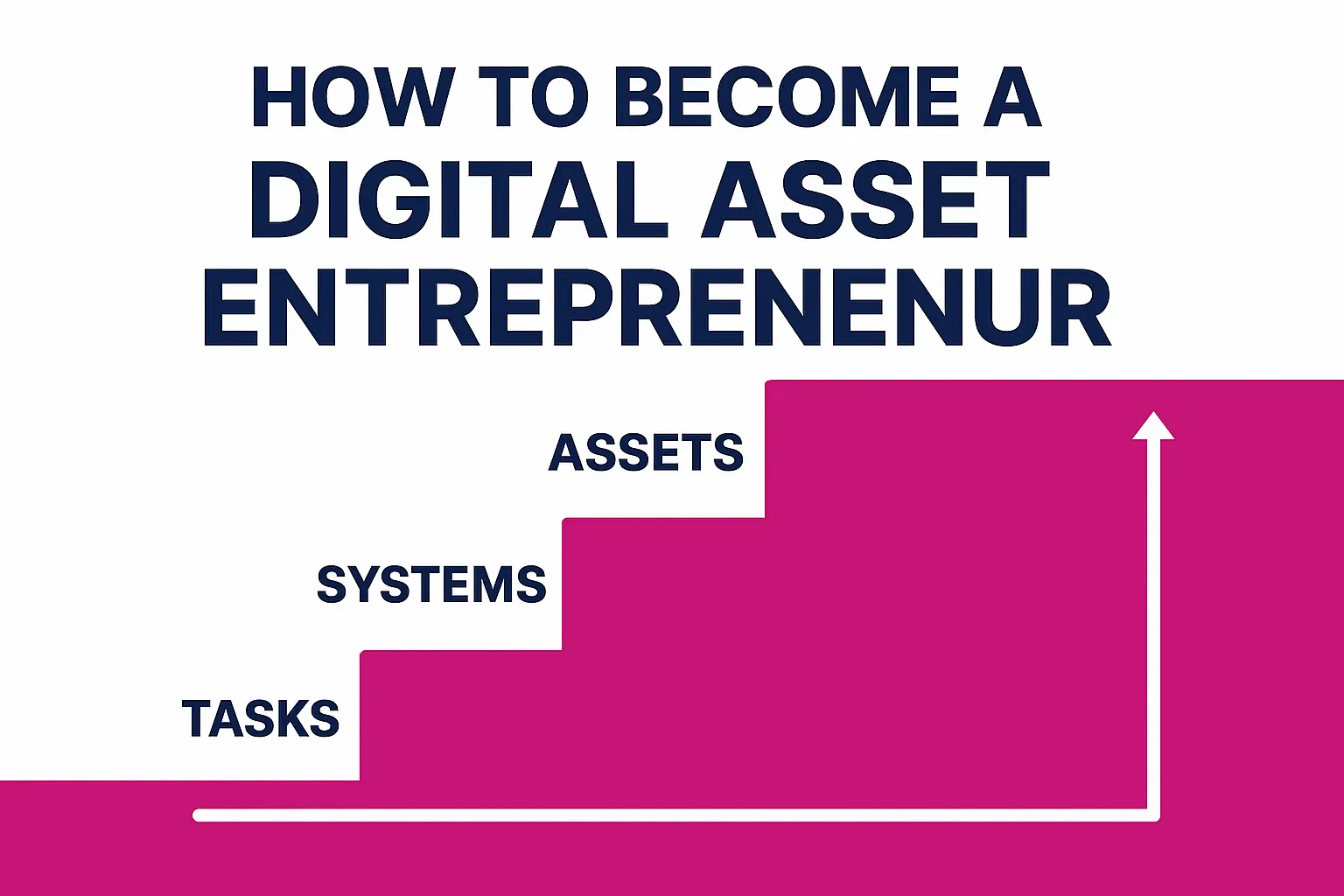
If your online work feels chaotic, it’s because you’re stuck running tasks with no system to carry the weight for you. Tasks drain your time, your focus, and your energy. Systems give you leverage. And the Digital Asset Entrepreneur path is the only path that pulls you out of the grind and into a structure that compounds your effort instead of consuming it.
Most people in the online world are drowning — not because they lack skill, but because they’re trapped in a cycle of doing everything manually. Every dollar requires a new task. Every client requires a new push. Every week feels like starting from zero. That’s not entrepreneurship. That’s survival.
A Digital Asset Entrepreneur (DAE) refuses that trap. You build assets that work even when you don’t. You turn your lived experience into repeatable value. You create systems that scale without demanding more hours from you. You stop chasing income and start engineering leverage.
This article shows you how to make that shift — from chaos to clarity, from tasks to assets, from effort to sovereignty. If you’re ready to stop operating like a worker and start building like an owner, your transition begins here.
Before You Start: The DAE Mindset Shift
Before you dive into the technical steps, you need to understand the core philosophy behind becoming a Digital Asset Entrepreneur. This isn’t the mindset of an influencer chasing trends or a freelancer trading hours for dollars. A DAE builds with intention.
You focus on sovereignty, systems, and long‑term durability.
You’re not looking for a shortcut or a quick win. You’re building a foundation of proof‑of‑work — real actions, real assets, and real systems that hold up even when platforms change, algorithms shift, or attention moves somewhere else. This mindset is what separates people who stay stuck in tasks from those who build assets that compound.
When you adopt this identity, you stop asking, “How fast can I make money?” and start asking, “What can I build today that will still matter a year from now?”
That shift is the beginning of everything.
Define Your Identity: DAE vs. Gig Worker
The first step is a mental one. You must stop seeing yourself as a "worker" and start seeing yourself as an "owner." A gig worker performs a task once and gets paid once. A Digital Asset Entrepreneur designs a system once that generates value indefinitely.
Understanding the Difference
- The Gig Worker: Relies on platforms like Upwork or Fiverr. They are subject to the whims of gatekeepers and must constantly hunt for the next client.
- The DAE: Operates through the Vault Hustle Framework. They own their communication channels, automate their delivery, and create assets that run while they sleep.
By identifying as a DAE, you commit to building structures that endure. You are no longer just producing content; you are building an infrastructure for your future.
Master Your Email Operating System (EOS)
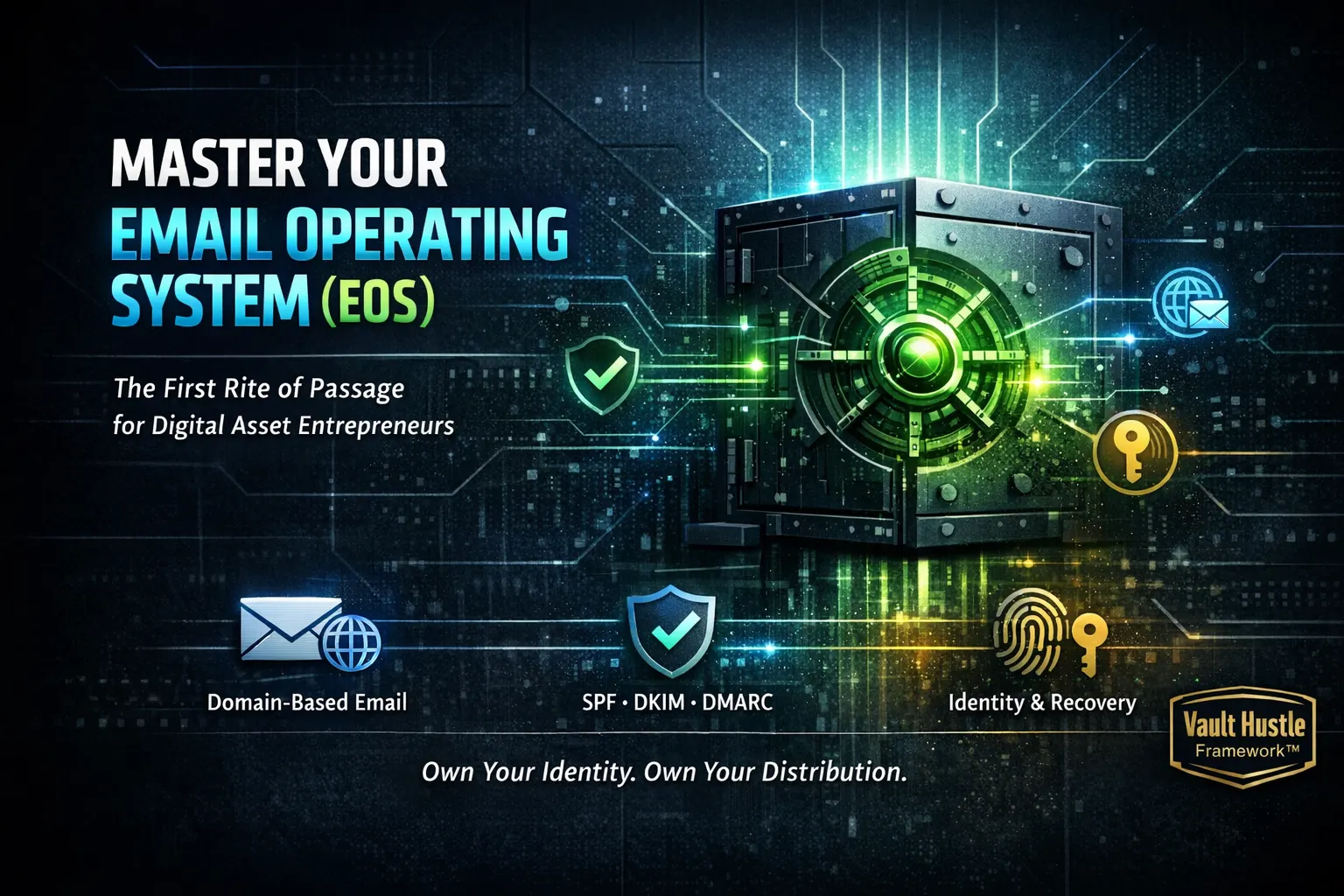
According to the Vault Hustle Framework, the Email Operating System (EOS) is the first subsystem every DAE must master. Email is the primary identity layer of the internet. It is tied to your financial accounts, your 2FA security, and your direct line to your audience.
Why EOS is Your Communication Backbone
You cannot build a digital empire on rented land (like social media). If your Instagram account is deleted tomorrow, do you still have a business? Mastery of EOS ensures you own your distribution. This involves:
- Setting up a verified, domain-based email (e.g., [email protected]).
- Implementing authentication protocols like SPF, DKIM, and DMARC to ensure deliverability.
- Establishing a system for identity verification and secure account recovery.
Without a stable EOS, your assets are fragile. With it, you have the "rite of passage" into true digital entrepreneurship.
Audit Your Lived Experiences for Asset Potential
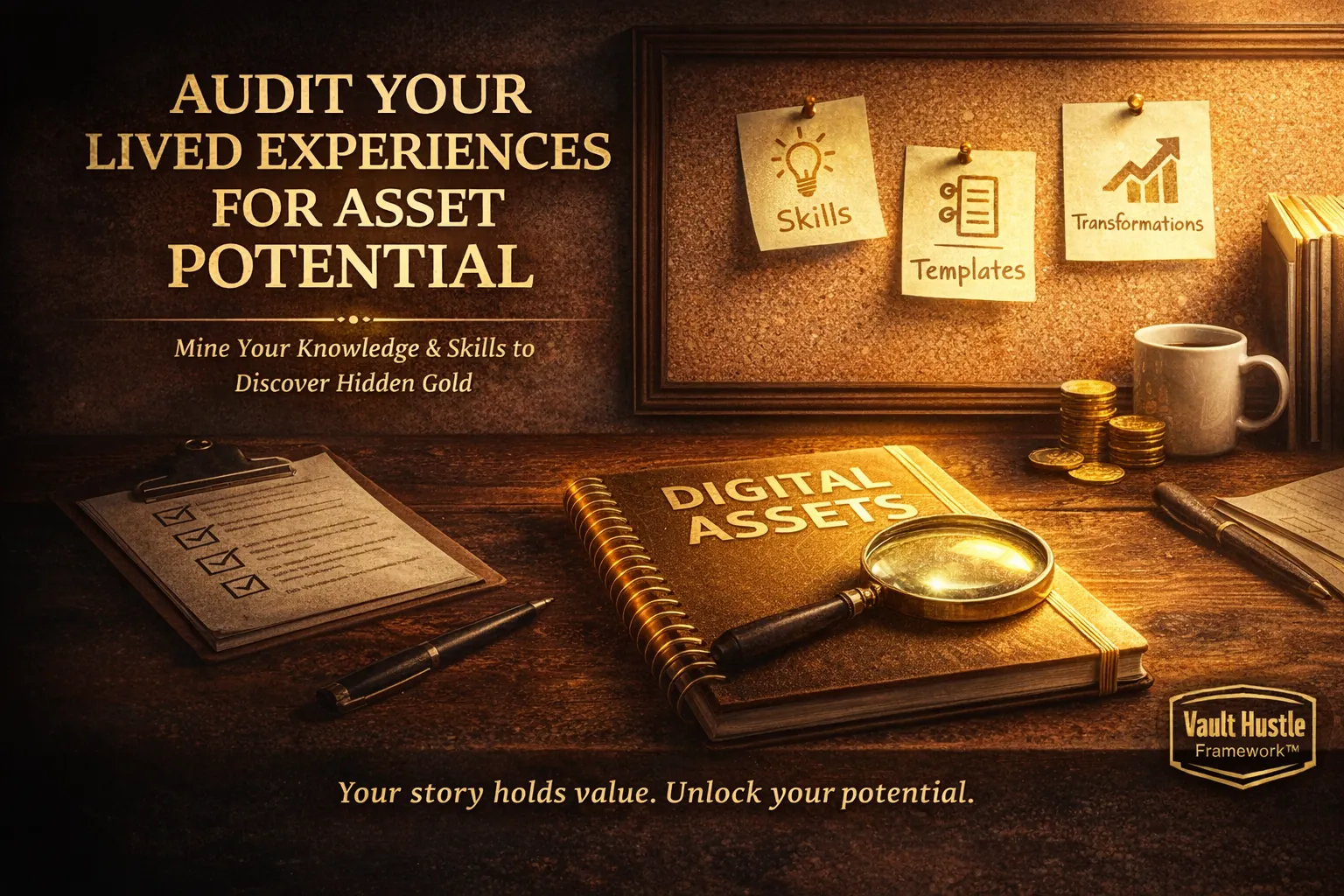
One of the biggest hurdles for beginners is wondering what they have to offer. The DAE philosophy suggests that your lived experiences and skills are your greatest raw materials. You don't need a PhD to create a digital asset; you just need to solve a problem you’ve already solved for yourself.
How to Identify Your Assets
Ask yourself the following questions to find your "Digital Gold":
- What is a task I have performed so often that I could do it in my sleep?
- What are the "templates" or "checklists" I use to keep my own life or work organized?
- What is a specific transformation I have achieved (e.g., losing weight, learning a software, or organizing a home office)?
These experiences can be documented and turned into structured knowledge bases, which form the heart of the Digital Asset Layer.
Choose Your First Beginner-Friendly Digital Asset
Don't try to build a massive software platform on day one. Start with assets that are easy to create but offer high utility. Focus on these three beginner-friendly types:
1. Educational Guides and Workshops
Turn your knowledge into a PDF guide, a structured video tutorial, or a simple workshop. These assets allow you to scale your teaching without having to be present for every student.
2. Template Kits and Toolkits
If you have a specific way of organizing your budget, your project management, or your social media posts, turn that into a template. People pay for speed and convenience; a well-made template saves them hours of work.
3. Automated Onboarding Flows
Even if you still provide a service, you can turn the process of starting with a new client into an asset. An automated onboarding flow ensures that every client gets the same high-quality experience without you having to send manual emails.
Construct Your Automation Layer
Once you have an asset, you need a way to deliver it without manual intervention. This is where the Automation Layer comes in. Automation isn't about being lazy; it's about being consistent. It replaces repetitive tasks with 24/7 "digital workers."
The Role of Chatbots and Workflows
Modern DAEs use tools like chatbots to handle front-end interactions. A chatbot on your website or social media can:
- Capture leads while you are offline.
- Answer frequently asked questions instantly.
- Deliver digital products immediately after a purchase.
- Guide new users through an onboarding sequence.
By connecting your Automation Layer to your EOS, you create a seamless loop that moves a stranger from "curious" to "customer" without you lifting a finger.
Implement the Digital Asset Layer for Compounding Value
The Digital Asset Layer is the third component of the framework. This is where your work becomes compounding. Unlike a physical product that requires shipping and inventory, a digital asset can be sold a thousand times with zero additional cost.
Focusing on Economic Durability
To ensure your assets last, they must be built on function and utility. Trends fade, but systems that solve problems endure. As you build your library of assets, you are diversifying your income streams. If one asset slows down, another can pick up the slack. This is how you move from a fragile income to a resilient one.
Secure Your Sovereignty with Bitcoin Self-Custody
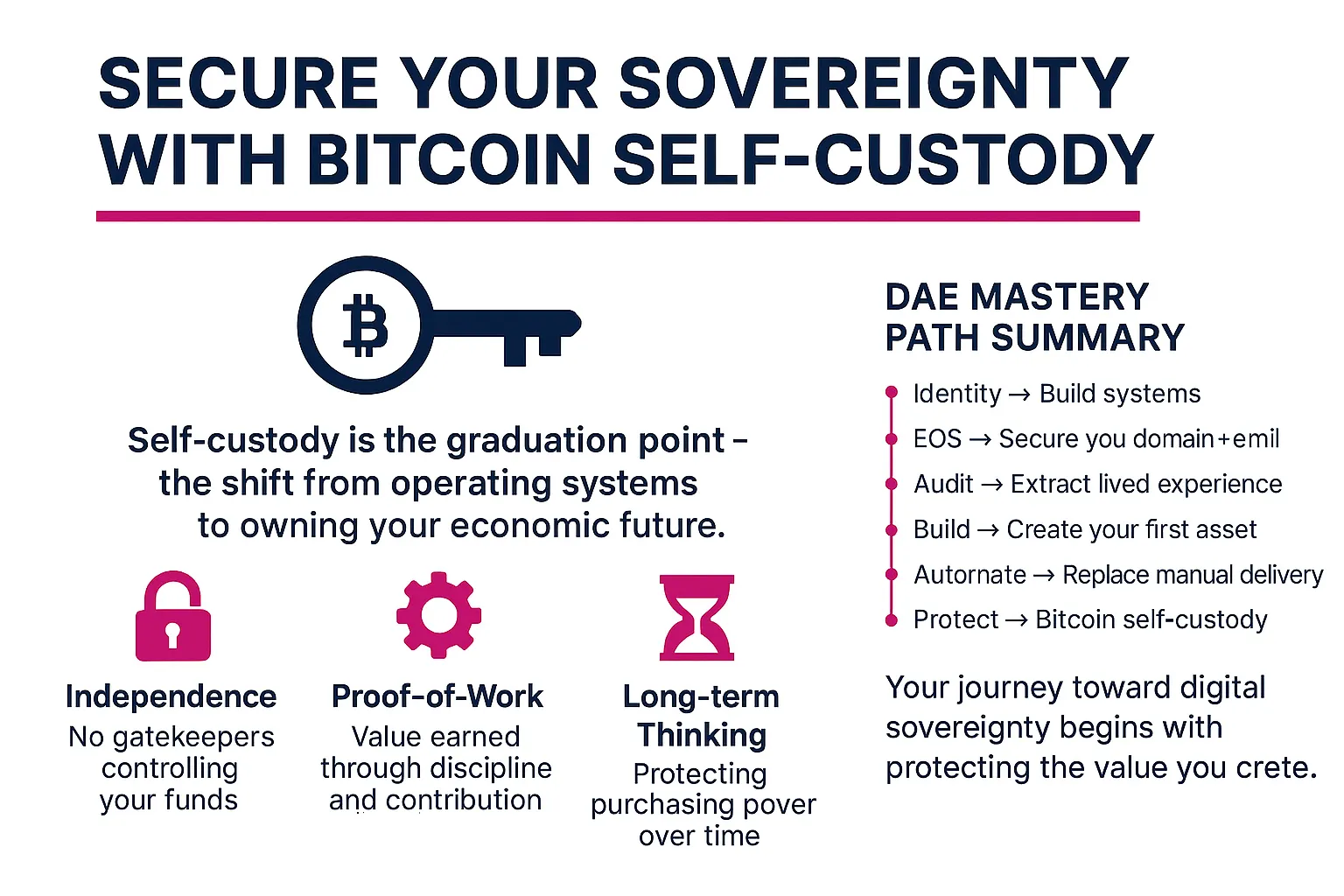
The final step in the DAE Mastery Path is the Sovereignty Layer. As you begin to generate value through your digital assets, you must protect that value. In the digital world, true ownership means not relying on a bank or a third-party platform to hold your wealth.
Why Bitcoin Fits the DAE Identity
Bitcoin is the ultimate digital asset because it is decentralized and permissionless. For a DAE, Bitcoin self-custody (holding your own private keys) ensures that the rewards of your hard work cannot be frozen or seized. It aligns with the DAE principles of:
- Independence: No gatekeepers controlling your funds.
- Proof-of-Work: Value earned through discipline and contribution.
- Long-term Thinking: Protecting your purchasing power against inflation.
While this is an advanced step, it is the "graduation point" where you move from operating systems to owning your economic future.
Summary Checklist for Your DAE Journey
To help you stay on track, keep this summary handy as you build your empire:
- Identity: Stop trading time; start building systems.
- EOS: Secure your domain and authenticated email.
- Audit: Identify your skills and lived experiences.
- Build: Create your first guide, template, or flow.
- Automate: Set up chatbots and sequences to handle delivery.
- Protect: Learn the basics of Bitcoin self-custody.
Note: You can print this section or save it as a PDF to use as a daily reference while you navigate the Mastery Path.
Your Path to Digital Sovereignty
Becoming a Digital Asset Entrepreneur is not about chasing the latest "get rich quick" scheme. It is a disciplined path that requires building a solid foundation through the Vault Hustle Framework. By focusing on your Email Operating System, your Automation Layer, and your Digital Asset Layer, you are positioning yourself to thrive in a global economy that is growing at 17% annually.
The shift from tasks to assets is the most important move you can make for your financial future. Start small, master one layer at a time, and remember: the goal is to build systems that endure.
Your journey toward digital sovereignty starts with the first asset you create today.